
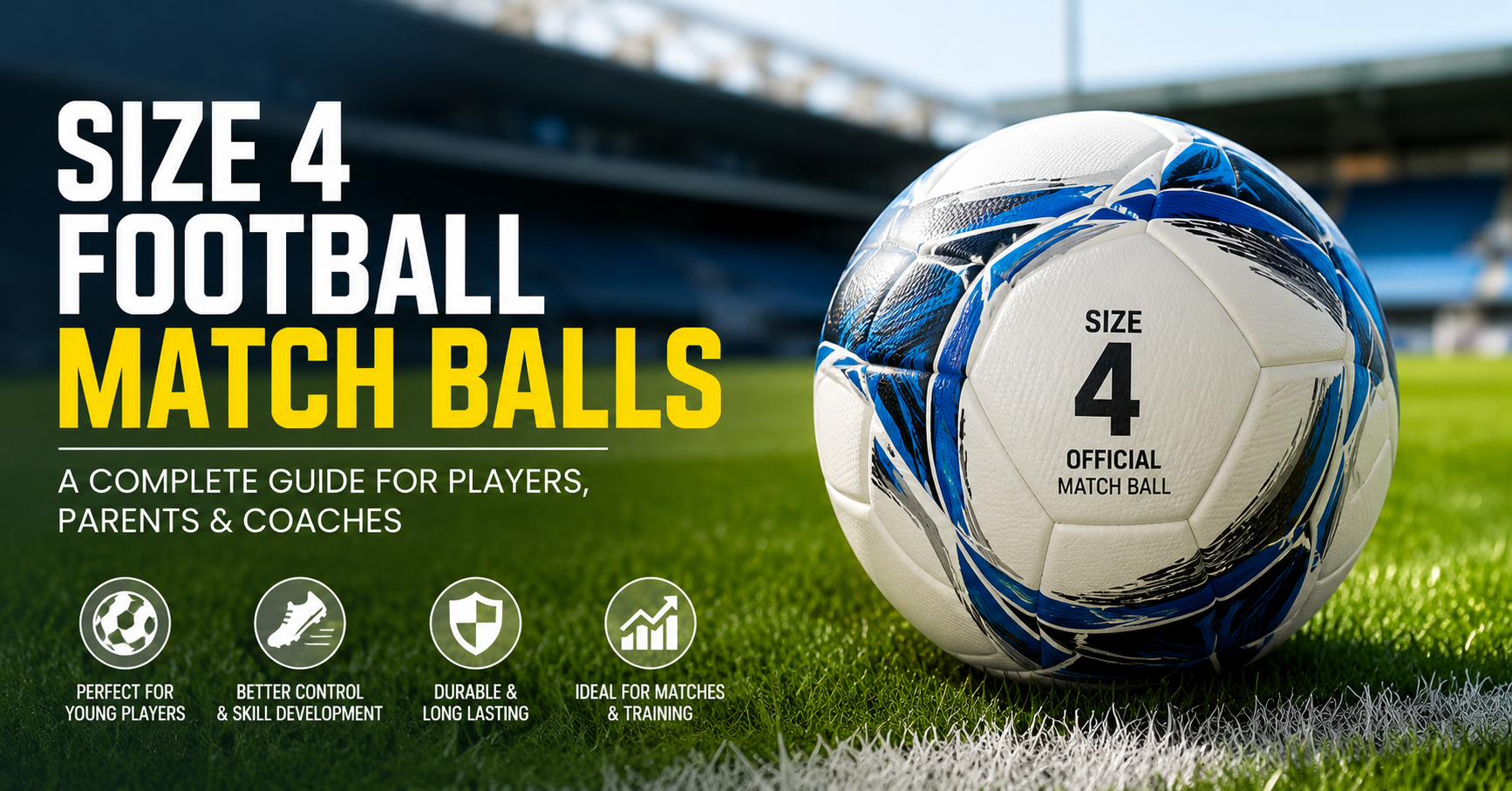

Football is one of the most popular sports in the world, and choosing the right football can make a huge difference in performance, comfort, and skill development. Among the different ball sizes available, size 4 football match balls are widely used for youth games, training sessions, and competitive junior matches.
Whether you are a parent buying a football for your child, a coach selecting equipment for a team, or a player improving technical skills, understanding how size 4 football match balls work is important. The right ball helps players develop better control, passing accuracy, and confidence on the pitch.
In this guide, you will learn what a size 4 football is, who should use it, key features to look for, and how to choose the best option for matches and training.
What Is a Size 4 Football Match Ball?
A size 4 football is slightly smaller than the standard adult size 5 football. It is designed mainly for young players between the ages of 8 and 12. The ball usually measures around 25 to 26 inches in circumference and weighs between 350 and 390 grams.
Match balls in this category are made for official games or high-level training. Compared to cheaper practice balls, match balls often offer better flight stability, improved touch, and stronger durability.
The smaller size allows younger players to control the ball more easily. This supports technical development and reduces strain during passing, dribbling, and shooting.
Why Size 4 Footballs Matter for Young Players
Using the correct football size is extremely important in youth development. A ball that is too large or heavy can negatively affect technique and confidence.
For example, younger players often struggle to kick a full-size ball with accuracy. This can lead to poor habits and frustration during training sessions. A size 4 football provides a better balance between control and challenge.
Coaches around the world recommend size 4 football match balls because they help players:
- Improve dribbling skills
- Develop accurate passing
- Learn proper shooting technique
- Build confidence during matches
Young footballers who train consistently with the correct ball size usually progress faster in technical areas of the game.
Key Features of Quality Size 4 Football Match Balls
Not all footballs are made the same. High-quality match balls include advanced materials and construction methods that improve gameplay.
Durable Outer Material
Most premium size 4 football match balls use polyurethane (PU) covers. PU provides a softer touch while remaining durable enough for regular use.
Cheaper PVC balls may last longer on rough surfaces, but they often feel harder and less responsive.
Consistent Flight Performance
A good match ball should travel smoothly through the air. Modern footballs are designed with carefully stitched or thermally bonded panels to improve stability.
This is especially important during long passes and shots on goal.
Strong Air Retention
Quality footballs usually contain butyl or latex bladders. Butyl bladders retain air longer, while latex bladders provide a softer feel.
For regular training and matches, many players prefer butyl because it requires less frequent inflation.
Water Resistance
Match balls often include water-resistant coatings. This prevents the ball from becoming too heavy during wet conditions.
For outdoor matches, this feature can significantly improve performance.
Difference Between Match Balls and Training Balls
Many buyers confuse match balls with standard training footballs. While both can be used for practice, there are noticeable differences.
| Feature | Match Ball | Training Ball |
|---|---|---|
| Performance | High-level accuracy and touch | Basic performance |
| Material Quality | Premium materials | More durable but simpler materials |
| Price | Usually higher | More affordable |
| Flight Stability | Excellent | Moderate |
| Intended Use | Competitive games | Daily practice |
If a player participates in leagues or tournaments regularly, investing in a quality match ball is often worthwhile.
Benefits of Using Size 4 Football Match Balls
There are several reasons why coaches and players prefer proper match balls during youth games.
Better Skill Development
The smaller size helps players improve first touch, close control, and passing precision. These are foundational skills in football.
Improved Confidence
When players can control the ball more comfortably, they become more confident during matches. Confidence often leads to better decision-making on the field.
Safer for Younger Players
A size 4 football is lighter than a standard adult ball. This reduces impact stress, especially during heading drills or powerful shots.
Match-Like Experience
Using a proper match ball during training helps players adapt to real-game conditions. This can improve overall match readiness.
Pros and Cons of Size 4 Football Match Balls
| Pros | Cons |
|---|---|
| Ideal for players aged 8–12 | Not suitable for adult competitions |
| Easier ball control for young players | Premium match balls can be expensive |
| Supports skill development | Requires proper maintenance |
| Lighter and safer for juniors | Some models wear quickly on rough surfaces |
| Better passing and shooting accuracy | May need regular inflation |
How to Choose the Best Size 4 Football Match Ball
Buying the right football depends on several factors. Instead of choosing based only on brand name, it is better to focus on performance and usage.
Consider Playing Surface
If the ball will mainly be used on grass pitches, most match balls will perform well. However, rough concrete or hard ground surfaces can damage premium balls quickly.
For street or hard-surface football, look for reinforced durability.
Check Certification Standards
Many official footballs carry certifications from organizations like FIFA or other football associations. These certifications indicate the ball has passed quality tests for weight, shape retention, and performance.
Look at Panel Construction
Thermally bonded footballs generally offer better water resistance and smoother flight compared to hand-stitched balls.
However, hand-stitched footballs are often more affordable and durable for everyday use.
Choose Trusted Brands
Popular football brands usually invest heavily in quality testing and technology. Well-known manufacturers often produce reliable size 4 football match balls for schools, clubs, and academies.
Tips for Maintaining a Football Match Ball
Proper maintenance helps extend the life of any football.
Here are a few simple tips:
- Keep the ball inflated at the recommended pressure
- Avoid using match balls on rough concrete
- Clean mud and dirt after games
- Store the ball in a cool, dry place
- Do not overinflate the ball
These small habits can significantly improve durability and performance over time.
Common Questions About Size 4 Football Match Balls
What age group uses a size 4 football?
Size 4 footballs are generally recommended for players aged 8 to 12 years old.
Can adults use a size 4 football?
Adults can use them for technical drills or casual play, but official adult matches require size 5 footballs.
Are expensive match balls worth it?
Higher-quality footballs usually provide better touch, flight consistency, and durability. For competitive youth players, they are often a worthwhile investment.
How often should a football be inflated?
This depends on usage and bladder type. Most footballs should be checked weekly to maintain optimal pressure.
Final Thoughts
Size 4 football match balls play an important role in youth football development. They are designed to help young players improve control, technique, and confidence while making the game more enjoyable and safe.
Choosing the right football involves more than just appearance or price. Material quality, durability, flight performance, and comfort all matter when selecting the best option.
Whether for school matches, academy training, or weekend games, a quality size 4 football can make a noticeable difference in player performance and development.
If you are planning to buy a football for a young player, take time to compare features carefully and choose a ball that matches their playing level and training needs.