
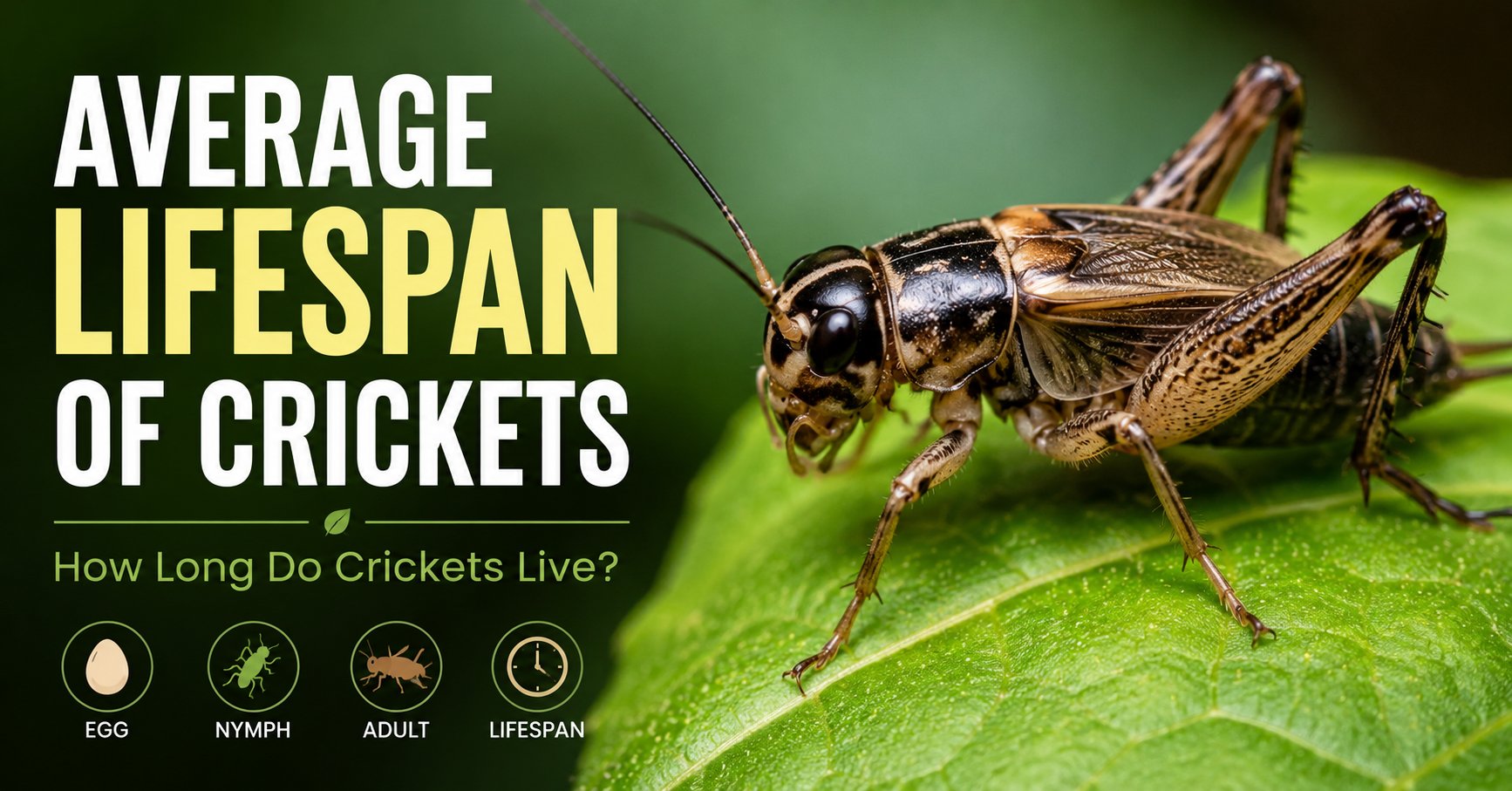

Crickets are fascinating insects known for their chirping sounds, jumping ability, and important role in ecosystems. Many people hear crickets at night but rarely stop to think about how long these tiny insects actually live. So, what is the average lifespan of crickets?
The answer depends on several factors, including the species, environment, diet, predators, and whether the cricket lives in the wild or in captivity. While crickets may seem short-lived compared to larger animals, their lifespan is perfectly adapted to their life cycle and ecological role.
In this guide, we’ll explore the average lifespan of crickets, what affects their survival, how different species compare, and some interesting facts you may not know.
What Is the Average Lifespan of Crickets?
The average lifespan of crickets is usually 8 to 12 weeks for adult crickets, though their total life cycle from egg to death can range from 2 to 3 months, and in some species, even longer.
Most common house crickets and field crickets follow a simple life cycle:
- Egg stage: 1 to 3 weeks
- Nymph stage: 6 to 8 weeks
- Adult stage: 8 to 10 weeks
In total, many crickets live for about 90 days, though some species may survive up to a year under ideal conditions.
This may sound short, but for insects, it is a fairly standard lifespan. Crickets reproduce quickly, which helps maintain their population even though individual insects do not live very long.
Cricket Life Cycle and Lifespan Stages
To understand the average lifespan of crickets, it helps to look at their life stages.
Egg Stage
Female crickets lay eggs in moist soil or hidden places. Depending on temperature and species, eggs hatch in 7 to 21 days.
Warm conditions usually speed up development. Cold temperatures may slow or delay hatching.
Nymph Stage
After hatching, crickets enter the nymph stage. Nymphs look like tiny adult crickets but do not yet have wings.
During this stage, they molt several times as they grow. This phase lasts around 6 to 8 weeks, though it can vary based on food and climate.
Adult Stage
Adult crickets are fully developed and can reproduce. This is the stage where males chirp to attract females.
Adult crickets usually live about 2 to 3 months, depending on conditions.
Lifespan of Different Cricket Species
Not all crickets live the same amount of time. Different species have slightly different life expectancies.
House Cricket
House crickets are common in homes and pet food breeding setups.
- Average lifespan: 8 to 10 weeks as adults
- Total life cycle: 2 to 3 months
These crickets thrive in warm indoor environments and often live slightly longer in captivity than in the wild.
Field Cricket
Field crickets are often found outdoors in grassy areas.
- Average lifespan: around 90 days
- Some may survive longer depending on weather
Many field crickets die before reaching their full lifespan because of predators or seasonal changes.
Mole Cricket
Mole crickets are underground insects known for digging.
- Lifespan: up to 1 year in some species
Their longer life cycle makes them different from many common crickets.
Camel Cricket
These humpbacked crickets are often found in damp places like basements.
- Lifespan: 1 to 2 years in some cases
However, species and habitat greatly influence survival.
Factors That Affect the Average Lifespan of Crickets
A cricket’s lifespan is not fixed. Several conditions can shorten or extend its life.
1. Temperature
Crickets are cold-blooded insects, so temperature directly affects their metabolism.
Warm environments:
- Faster growth
- Earlier maturity
- Sometimes shorter lifespan due to faster aging
Cool environments:
- Slower growth
- Delayed development
- In some cases, slightly longer life
Extreme temperatures can kill crickets quickly.
2. Food Availability
Crickets need a steady diet to survive.
They eat plant matter, fungi, small insects, and even decaying material. Pet crickets in captivity often eat grains, vegetables, and commercial feed.
Poor nutrition can lead to:
- Weak growth
- Reduced reproduction
- Shorter lifespan
Healthy diets usually improve survival.
3. Predators
In the wild, crickets face many dangers.
Common predators include:
- Birds
- Frogs
- Lizards
- Spiders
- Small mammals
Because of this, many crickets never reach their full biological lifespan.
4. Moisture and Humidity
Crickets need the right humidity balance. Too little moisture can cause dehydration, while too much can encourage disease and mold.
5. Disease and Parasites
Like other insects, crickets can be affected by fungal infections, mites, and parasites that shorten their life expectancy.
Do Crickets Live Longer in Captivity?
Yes, crickets often live longer in captivity if conditions are well managed.
In captivity, crickets are protected from predators and usually have:
- Regular food supply
- Stable temperature
- Proper humidity
- Less environmental stress
For example, feeder crickets raised for reptiles may live closer to their full expected lifespan if properly cared for.
However, overcrowding or poor hygiene in cricket containers can shorten their life.
Pros and Cons of Cricket Lifespan
| Pros | Cons |
|---|---|
| Short life cycle helps rapid reproduction | Individual crickets do not live very long |
| Quick growth supports ecosystem balance | Easily affected by predators |
| Useful for breeding as feeder insects | Sensitive to temperature and humidity |
| Adaptable to many environments | Disease can spread quickly in colonies |
Why Do Crickets Have Short Lifespans?
Many insects have short lifespans because they are designed to reproduce quickly rather than live for years.
Crickets invest energy into:
- Growing fast
- Reproducing early
- Producing many offspring
This strategy helps them survive as a species even if individual crickets die young.
It is part of nature’s balance. Instead of long life, crickets rely on large numbers and rapid reproduction.
How Can You Tell a Cricket Is Near the End of Its Life?
If you keep crickets as pets or feeder insects, there are signs of aging:
- Slower movement
- Less chirping in males
- Reduced appetite
- Difficulty jumping
- Weak or faded body appearance
These signs usually appear in older adult crickets.
Common Questions About Cricket Lifespan
Do crickets live for a year?
Some species, like mole crickets or camel crickets, may live close to a year or longer. However, common house crickets usually do not.
How long do crickets live indoors?
Indoor crickets may live 8 to 10 weeks as adults, sometimes longer if food and temperature are ideal.
Do crickets die after laying eggs?
Female crickets do not die immediately after laying eggs, but reproduction is often followed by aging and eventual death within their natural lifespan.
Can pet crickets live longer?
Yes, proper food, warmth, and clean habitat can help pet crickets live longer than wild crickets.
Why do crickets die so quickly?
Fast metabolism, environmental stress, predators, and short insect life cycles all contribute to their relatively short lives.
Interesting Facts About Cricket Lifespan
Crickets may be small, but their lives are surprisingly complex.
Some interesting facts include:
- Male crickets chirp more actively during adulthood
- Crickets shed their outer skin multiple times before becoming adults
- Temperature can affect how fast they grow
- Wild crickets often die sooner than captive ones because of predators
These factors make cricket lifespan more variable than many people expect.
Conclusion
The average lifespan of crickets is generally 2 to 3 months, with adult crickets living around 8 to 12 weeks in most common species. However, species type, food, temperature, humidity, and predators all play a major role in determining how long a cricket survives.
While crickets may not live very long, their short lifespan supports rapid reproduction and helps maintain ecological balance. Whether you are curious about backyard crickets or caring for feeder crickets at home, understanding their life cycle gives you a better appreciation for these remarkable insects.
Want to learn more about insects and animal life cycles? Explore related guides to discover more fascinating facts from nature.