
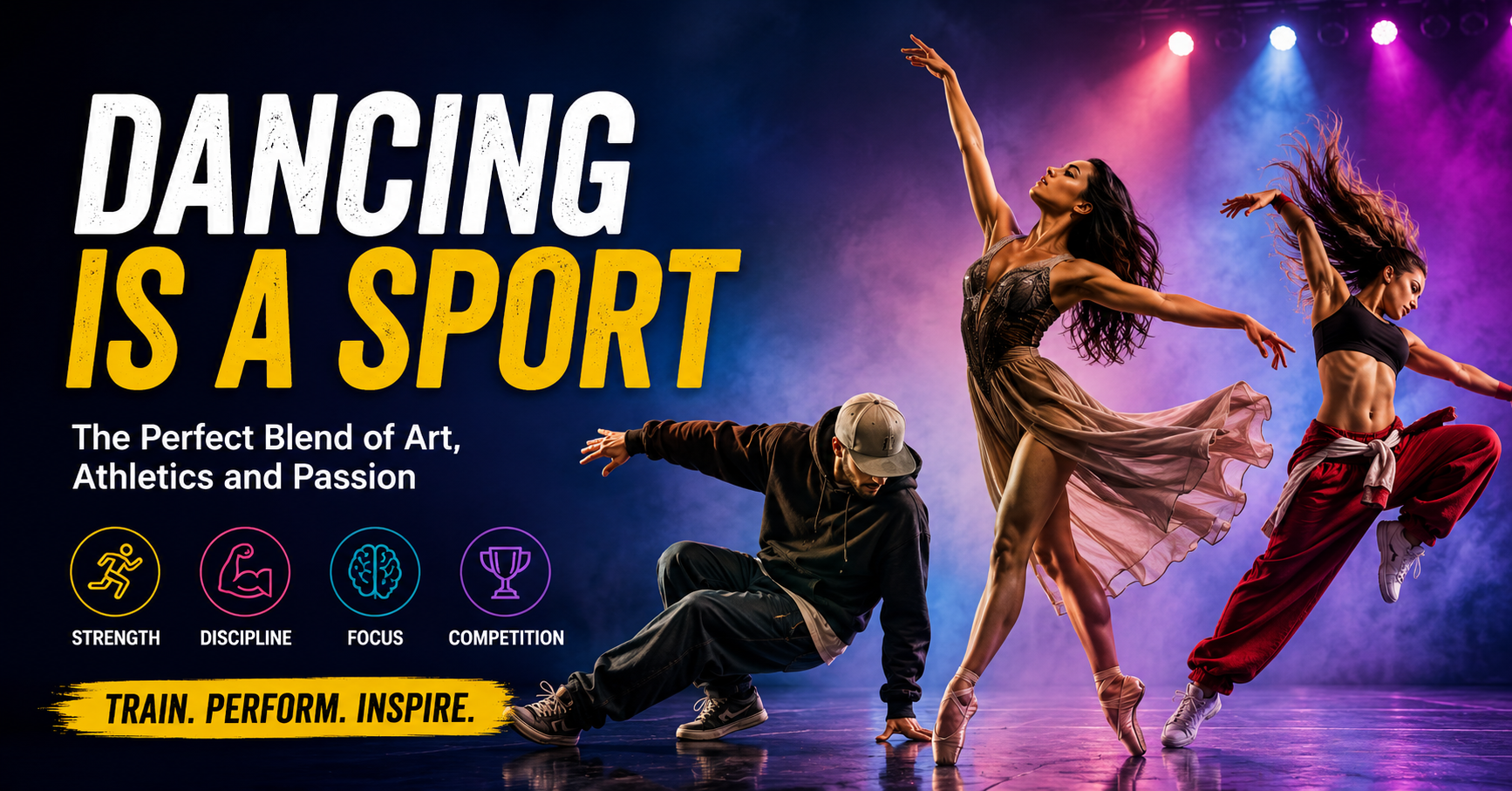

Many people think dancing is only a form of entertainment or art. However, dancers around the world know that dance requires strength, discipline, endurance, and intense training. This is why the debate around “dancing is sport” continues to grow. Today, many experts, schools, and athletic organizations recognize dance as both an art form and a competitive sport.
From ballet and hip-hop to ballroom and breakdancing, dance pushes the human body to its limits. Professional dancers train for hours every day, follow strict fitness routines, and compete in high-pressure competitions. In fact, dance became even more respected in the sports world after breakdancing was included in international sporting events.
So, is dancing really a sport? The answer is yes—and there are many reasons to support it.
What Makes Something a Sport?
Before understanding why dance qualifies as a sport, it helps to know what defines a sport in the first place.
A sport usually includes:
- Physical activity and skill
- Training and practice
- Competition
- Rules and techniques
- Mental focus and discipline
Dance checks every one of these boxes. Dancers spend years improving flexibility, coordination, stamina, and performance quality. Competitive dancers also compete under strict judging criteria, much like gymnasts or figure skaters.
Because of this, many people now consider dance a combination of athletic performance and artistic expression.
Why Dancing Is Considered a Sport
Dance Requires Physical Strength
One of the strongest arguments for why dancing is a sport is the physical demand it places on the body. Professional dancers train like athletes. They develop strong muscles, excellent balance, and cardiovascular endurance.
For example, ballet dancers must support their body weight while balancing on their toes. Hip-hop dancers perform explosive moves that require power and agility. Contemporary dancers combine flexibility with controlled movement.
A dancer’s training often includes:
- Cardio workouts
- Stretching routines
- Strength training
- Balance exercises
- Rehearsals lasting several hours
These physical demands are similar to those found in traditional sports such as gymnastics or swimming.
Competitive Dance Is Growing Worldwide
Competitive dancing has become extremely popular across the world. Dance competitions are organized at local, national, and international levels. Participants are judged on technique, timing, creativity, coordination, and performance.
Popular competitive dance styles include:
- Ballroom dance
- Salsa
- Ballet
- Jazz dance
- Hip-hop
- Breakdancing
The inclusion of breakdancing in major international competitions helped strengthen the argument that dancing is a sport. Athletes compete head-to-head, train professionally, and follow strict rules.
Dancers Face Injuries Like Athletes
Another important point is that dancers experience sports-related injuries just like athletes. Constant training can lead to muscle strain, ankle injuries, knee pain, and stress fractures.
Sports medicine specialists now work closely with dancers to improve recovery and prevent injuries. Many dance academies even provide physical therapy support.
This shows that dance is not simply casual movement. It requires serious physical commitment and proper athletic care.
The Mental Side of Dance
Sports are not only physical. Mental focus also plays a major role. Dancing demands concentration, memory, discipline, and emotional control.
Dancers must remember choreography, stay in rhythm, and perform confidently under pressure. During competitions or stage performances, even small mistakes can affect results.
In addition, dance helps improve:
- Self-confidence
- Focus and concentration
- Emotional expression
- Teamwork skills
- Stress management
These mental benefits are one reason why dance is often recommended for children and adults alike.
Dance as Both Art and Sport
Some people hesitate to call dancing a sport because it includes artistic expression. However, being artistic does not remove its athletic nature.
Figure skating and synchronized swimming are also artistic, yet they are recognized sports. Dance belongs in the same category. It combines creativity with physical excellence.
The beauty of dance is that it allows athletes to express emotions while performing difficult physical movements. This combination makes dance unique compared to many traditional sports.
Instead of asking whether dance is art or sport, many experts now agree it can be both at the same time.
Different Types of Dance Sports
Many dance forms involve athletic competition and structured training. Some are even officially categorized as “dance sports.”
Ballroom Dance
Ballroom dancing involves pairs performing choreographed routines. It requires timing, coordination, posture, and stamina. Competitions are held worldwide with professional judging systems.
Breakdancing
Breakdancing, also known as breaking, is highly athletic. Dancers perform spins, freezes, flips, and power moves that require strength and flexibility.
Because of its competitive nature and physical intensity, breakdancing gained international recognition as a sport.
Ballet
Ballet may appear graceful, but it is one of the most physically demanding dance forms. Dancers train for years to master balance, posture, and technique.
Professional ballet dancers often practice as intensely as Olympic athletes.
Hip-Hop Dance
Hip-hop combines rhythm, creativity, and athletic movement. Competitive crews perform synchronized routines with advanced footwork and acrobatics.
The growing popularity of hip-hop competitions has helped increase respect for dance sports globally.
Pros and Cons of Dancing as a Sport
| Pros of Dancing as a Sport | Cons of Dancing as a Sport |
|---|---|
| Improves physical fitness and flexibility | High risk of injuries with intense training |
| Builds confidence and discipline | Competitive pressure can cause stress |
| Encourages creativity and self-expression | Professional training can be expensive |
| Helps improve mental health | Requires long hours of practice |
| Suitable for different age groups | Some people still do not recognize it as a sport |
How Dancers Train Like Athletes
Professional dancers follow strict routines similar to sports athletes. Their schedules often include fitness sessions, rehearsals, healthy eating plans, and recovery exercises.
A competitive dancer may train for several hours daily. Warm-ups, stretching, and conditioning exercises are essential parts of practice.
Nutrition also matters. Dancers need energy, hydration, and muscle recovery support. Many work with trainers and coaches to improve performance.
This level of commitment proves that dance is far more demanding than many people realize.
Common Questions About Dance as a Sport
Is dance officially recognized as a sport?
Yes, many organizations recognize competitive dance as a sport. Dance competitions follow structured rules and judging systems.
Why do some people not consider dance a sport?
Some people see dance mainly as an art form because it involves music and performance. However, its physical demands and competitive nature strongly support its place in sports.
Can dancing improve fitness?
Absolutely. Dancing improves flexibility, endurance, balance, coordination, and cardiovascular health. It is also an enjoyable way to stay active.
Is breakdancing a sport?
Yes. Breakdancing is widely recognized as a competitive sport because it requires athletic skill, structured competition, and intense training.
The Future of Dance Sports
Dance sports continue to grow every year. Social media, international competitions, and television shows have helped millions appreciate the athletic side of dance.
More schools and fitness programs now include dance as part of physical education. Competitive dance leagues are also becoming more professional and organized.
As awareness grows, the idea that “dancing is sport” is becoming more accepted worldwide.
Conclusion
The debate over whether dancing is a sport is becoming less controversial today. Dance clearly involves athletic ability, physical endurance, discipline, and competition. Dancers train hard, face injuries, and perform under pressure just like athletes in traditional sports.
At the same time, dance remains a powerful form of artistic expression. This unique combination of sport and art is what makes dance so special.
Whether someone dances for fitness, competition, or passion, there is no doubt that dance deserves respect as a true sport. If you have never explored dance before, now may be the perfect time to discover its physical and mental benefits for yourself.