

Introduction
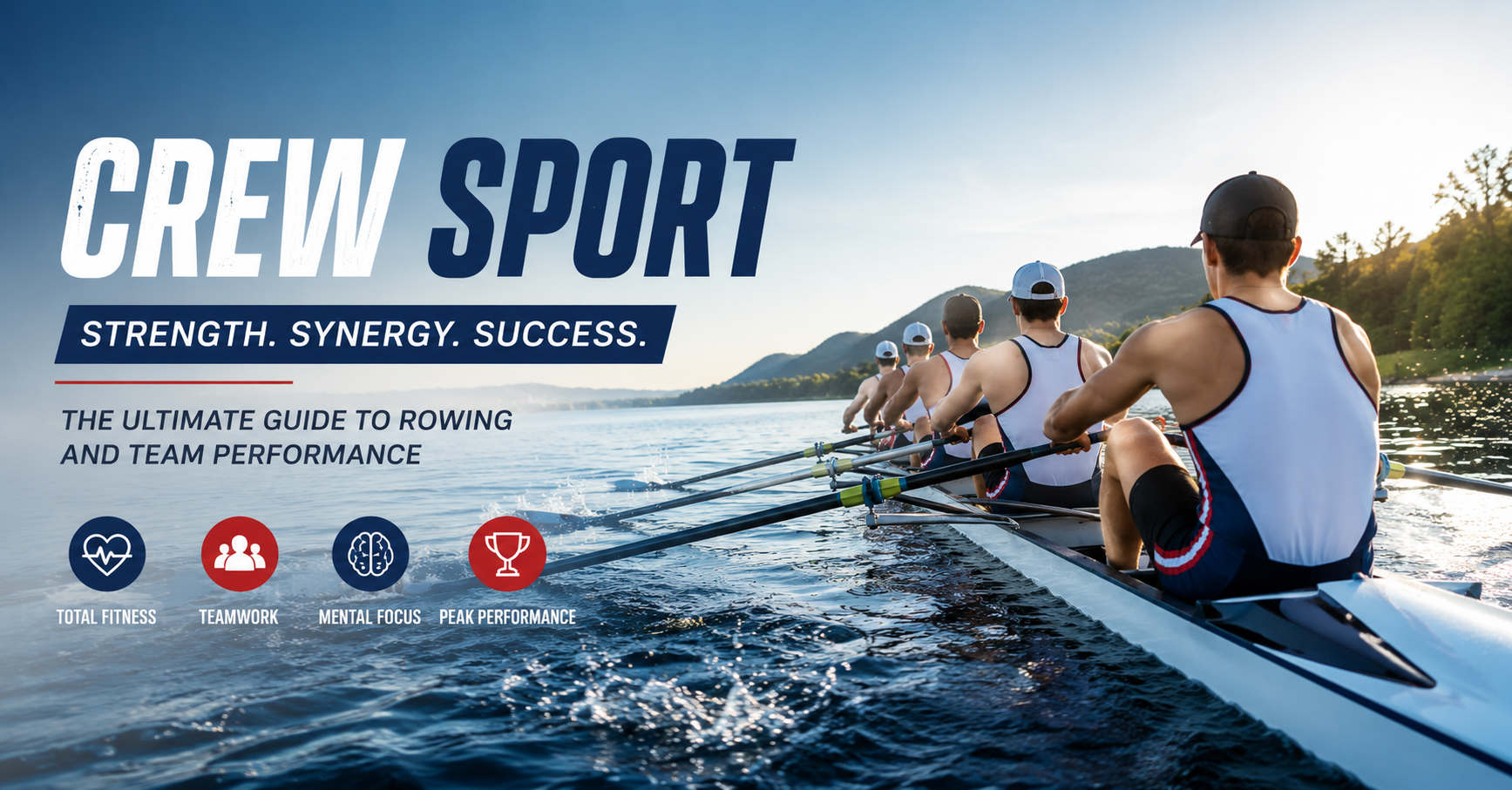
Crew sport, more commonly known as rowing, is one of the oldest and most physically demanding sports in the world. It combines strength, endurance, technique, and teamwork into a single athletic discipline. Whether performed recreationally on calm rivers or competitively at the Olympic level, crew sport challenges athletes both mentally and physically.
Unlike many sports where individual talent can dominate, success in crew sport depends heavily on synchronization. Every athlete in the boat must move as one unit. A small mistake by one rower can affect the performance of the entire team. This unique requirement makes rowing one of the purest examples of teamwork in athletics.
Over the years, crew sport has gained popularity in schools, universities, clubs, and professional competitions worldwide. Its combination of fitness benefits, competitive excitement, and strong team culture continues to attract athletes of all ages.
In this guide, we’ll explore what crew sport is, how it works, its benefits, training methods, equipment, challenges, and why so many people are passionate about rowing.
What Is Crew Sport?
Crew sport refers to the competitive sport of rowing, where athletes propel a boat through water using oars. The term “crew” typically describes the team of rowers working together in a single boat.
The objective is simple: move the boat as quickly as possible over a designated distance. However, achieving maximum speed requires precise coordination, proper technique, and significant physical conditioning.
Rowing competitions take place in different formats, including:
- Single sculls (one rower)
- Double sculls (two rowers)
- Quadruple sculls (four rowers)
- Coxed fours
- Coxed eights
The most recognizable event is the eight-person boat with a coxswain, often seen in major international competitions.
The History of Crew Sport
The origins of rowing date back thousands of years. Ancient civilizations used rowing boats for transportation, trade, and military purposes. Competitive rowing emerged later, particularly in Europe.
Modern crew sport developed in England during the 17th and 18th centuries. The famous university rivalry between the Universities of Oxford and Cambridge helped popularize competitive rowing. Their annual Boat Race remains one of the most celebrated rowing events in the world.
Today, rowing is featured prominently in international competitions, including the Olympic Games, where it has been part of the program since 1900.
How Crew Sport Works
At first glance, rowing appears straightforward. Athletes pull oars through the water to move the boat forward. In reality, the sport requires exceptional technical precision.
Each rowing stroke consists of four key phases:
1. Catch
The rower places the oar blade into the water while preparing to drive.
2. Drive
Legs, core, and upper body generate power to push the boat forward.
3. Finish
The rower completes the stroke and removes the blade from the water.
4. Recovery
The athlete returns to the starting position in preparation for the next stroke.
Elite crews repeat this cycle dozens of times per minute while maintaining perfect synchronization.
Types of Crew Boats
Different rowing events use different boat configurations.
Sculling Boats
In sculling, each rower uses two oars.
Examples include:
- Single scull
- Double scull
- Quad scull
Sweep Boats
In sweep rowing, each athlete uses one oar.
Common examples include:
- Pair
- Four
- Eight
Sweep rowing often emphasizes teamwork because every athlete contributes to maintaining balance and rhythm.
Physical Benefits of Crew Sport
One reason crew sport continues to grow is its impressive fitness benefits.
Full-Body Workout
Many people assume rowing mainly develops arm strength. In reality, approximately 60–70% of rowing power comes from the legs.
A rowing stroke engages:
- Quadriceps
- Hamstrings
- Glutes
- Core muscles
- Back muscles
- Shoulders
- Arms
Few sports activate as many muscle groups simultaneously.
Excellent Cardiovascular Fitness
Crew sport significantly improves heart and lung function. Competitive rowers often possess some of the highest aerobic capacities among athletes.
Regular rowing can help:
- Improve endurance
- Increase stamina
- Enhance heart health
- Boost overall fitness
Low Impact Exercise
Unlike running or many field sports, rowing places less stress on joints. This makes it attractive for individuals seeking intense workouts without excessive impact on knees and ankles.
Mental Benefits of Crew Sport
The advantages of rowing extend beyond physical fitness.
Improved Focus
Maintaining stroke rhythm and proper technique requires concentration. Athletes learn to stay focused for extended periods.
Stress Reduction
Many rowers describe being on the water as calming and therapeutic. Natural surroundings combined with rhythmic movement can reduce stress levels.
Mental Toughness
Crew sport demands perseverance. Training sessions are often long and physically challenging. Athletes develop resilience that benefits other areas of life.
The Importance of Teamwork in Crew Sport
Perhaps no aspect of rowing is more important than teamwork.
In a crew boat, athletes must move together with near-perfect timing. Strength alone cannot compensate for poor coordination.
Successful crews develop:
- Trust
- Communication
- Discipline
- Accountability
- Shared goals
This emphasis on collaboration is one reason many schools and universities encourage students to participate in rowing programs.
A highly synchronized crew often outperforms a stronger but less coordinated team.
Crew Sport Training Methods
Rowers follow structured training programs designed to build strength, endurance, and technical skill.
On-Water Training
The most important form of practice takes place on the water.
Athletes work on:
- Stroke efficiency
- Boat balance
- Synchronization
- Race strategy
Hours spent refining technique often make the difference between winning and losing.
Ergometer Training
Rowing machines, often called “ergs,” allow athletes to train indoors.
Benefits include:
- Consistent performance tracking
- Controlled workouts
- Year-round training opportunities
Ergometer scores are frequently used to evaluate athlete fitness.
Strength Training
Modern rowers incorporate weightlifting to improve power output.
Common exercises include:
- Squats
- Deadlifts
- Pull-ups
- Bench pulls
- Core training
Strength gains translate directly into stronger rowing strokes.
Endurance Workouts
Long-distance sessions improve cardiovascular fitness and help athletes sustain race pace.
These workouts may include:
- Long rows
- Cycling
- Running
- Interval training
Essential Equipment in Crew Sport
Quality equipment plays a major role in rowing performance.
Rowing Shell
The boat itself is called a shell. Modern shells are lightweight and designed for maximum speed.
Oars
Oars are carefully engineered to optimize efficiency and power transfer.
Coxswain Equipment
In coxed boats, the coxswain uses communication systems and steering equipment to guide the crew.
Performance Clothing
Rowers typically wear fitted athletic clothing to minimize drag and ensure freedom of movement.
Competitive Crew Sport
Competitive rowing exists at multiple levels.
School and University Rowing
Many athletes begin rowing during high school or university. Collegiate rowing programs are particularly strong in countries such as the United States and the United Kingdom.
Club Rowing
Local rowing clubs provide opportunities for recreational and competitive participation.
International Competition
Elite athletes compete at:
- World Championships
- Continental Championships
- Olympic Games
These events showcase the highest level of rowing talent and athletic performance.
Pros and Cons of Crew Sport
| Pros | Cons |
|---|---|
| Excellent full-body workout | Requires access to water and equipment |
| Improves cardiovascular fitness | Equipment can be expensive |
| Develops teamwork skills | Early morning training is common |
| Low-impact exercise | Weather can affect practice schedules |
| Enhances mental toughness | Learning proper technique takes time |
| Suitable for various age groups | Competitive training can be demanding |
Common Challenges in Crew Sport
Like any demanding sport, rowing presents challenges.
Technical Complexity
Beginners often underestimate how much technique matters. Learning proper form requires patience and coaching.
Physical Demands
Crew sport is highly demanding. Athletes must maintain strength, endurance, and flexibility simultaneously.
Environmental Conditions
Wind, currents, and weather can influence training and competition outcomes.
Despite these challenges, many athletes find the rewards far outweigh the difficulties.
Is Crew Sport Good for Beginners?
Absolutely.
Many rowing clubs offer beginner programs specifically designed for newcomers. Coaches introduce athletes to:
- Basic technique
- Safety procedures
- Equipment handling
- Team coordination
The learning curve can seem steep at first, but consistent practice leads to rapid improvement.
People of varying fitness levels can successfully participate in rowing and enjoy its benefits.
Why Crew Sport Continues to Grow
The popularity of crew sport continues to increase for several reasons.
First, it offers a unique combination of strength training and cardiovascular exercise. Second, it fosters strong social connections through teamwork. Third, it provides opportunities for competition, recreation, and personal growth.
Additionally, rowing appeals to individuals seeking a challenging sport that rewards dedication and discipline rather than relying solely on natural athletic ability.
As fitness awareness grows worldwide, more people are discovering the benefits of rowing both on and off the water.
Conclusion
Crew sport is far more than simply moving a boat across the water. It is a demanding athletic discipline that combines endurance, strength, technique, and teamwork in a way few sports can match. From beginners learning their first strokes to Olympians competing on the world stage, rowing challenges athletes to push their limits while working together toward a common goal.
The sport offers impressive physical benefits, supports mental well-being, and teaches valuable life skills such as discipline, resilience, and cooperation. While mastering crew sport requires commitment and practice, the rewards are substantial.
If you’re looking for a full-body workout, a supportive team environment, and a sport that continuously challenges you to improve, crew sport may be worth exploring. Whether recreational or competitive, rowing remains one of the most rewarding athletic experiences available today.